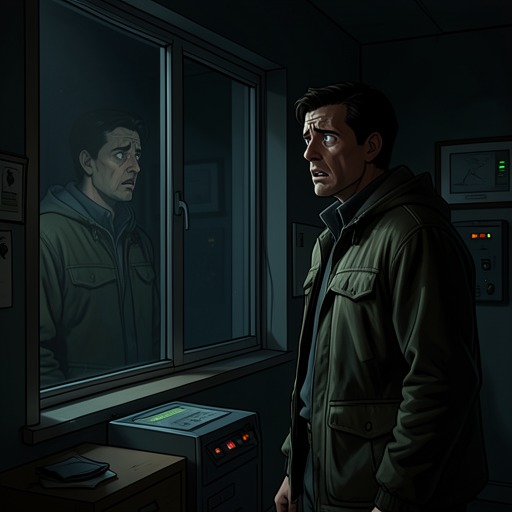
There is no kid; there is only you
American RustThere is no kid; there is only you is Isaac’s inward correction at a point when exhaustion and the demands of survival have narrowed his choices. The thought breaks the shelter of an imagined “kid” who might find a way forward for him: the person who remains responsible is Isaac himself.
Context: Survival Without Innocence
Isaac arrives at the recognition after considering the choice that kept him and Billy Poe alive. His reasoning is starkly bodily: faced with danger, a person may protect himself and the person closest to him before a stranger. He connects this instinct to Otto the Swede’s death, emphasizing that the killing was unplanned and carried out with a found object rather than a weapon brought for the purpose. Survival, in this account, does not make Isaac innocent; it shows how quickly a person can act when the stakes become immediate.
That reflection does not resolve into a clean moral lesson. Isaac asks what the point is, takes a deep breath, and gets up despite stiff, cramping legs. The immediate task is simply to move again. He recognizes that what he did in the store may have to be done again because he still has to eat. The thought of the kid appears within this pressure: it offers a way to place hope and responsibility somewhere other than in the exhausted adult who must act.
The Turn from the Kid to the Self
The passage stages the correction as an argument within Isaac rather than as a settled declaration. One part of him insists that he must admit the truth; another resists and would rather put faith in the kid to figure something out. The final thought—“There is no kid, he thought. There is only you.”—cuts through that division. Its shift from “I” in the preceding resistance to “you” makes self-recognition feel like an address Isaac cannot evade: he speaks to himself as someone who must answer for his actions and continue living.
The statement does not promise that Isaac has become stronger or that his circumstances will improve. Its practical implication is more limited and more demanding: he cannot wait for a separate, protected version of himself to solve the problem. The preceding insistence on setting one foot in front of the other gives that recognition a physical measure. Isaac stands and walks through tall grass beneath a dark sky, no longer able to see lights from any houses.
Narrative Function and Significance
The expression gathers the passage’s conflict between self-preservation and responsibility into a brief act of self-correction. Isaac has been telling himself that choosing his friend over a stranger was an instinctive, almost hard-wired response; now he must also face that those choices belong to him. The kid is not an independent rescuer or a way to disown what he has done. The sentence removes that imagined distance without supplying comfort or absolution.
The next chapter shifts to Grace alone in Billy Poe’s room, where she confronts his absence and the weight of having lived for him. That change of perspective places Isaac’s inward insistence beside another character’s reflection on the child who shaped her life. The juxtaposition does not erase their different circumstances: for Isaac, the kid is a story he can no longer rely on; for Grace, Billy remains the absent son whose presence still organizes her grief.